Most units and townhouses need only a few well-placed security cameras to cover their main entry points. The right number depends on the layout, the number of entrances, the areas you want to protect and whether you can install cameras in the places you need.
When planning CCTV installation on the Gold Coast start by deciding what each camera needs to show. Adding more cameras will not help much if they all record the same area or miss an important entrance.
Start with the areas you want to protect
Before choosing cameras, walk around your property and list the areas you want to monitor. This helps you decide where cameras are useful and which areas do not need coverage.
For a unit or townhouse, you may want to monitor:
- The front door or private entrance.
- A garage or allocated parking space.
- A rear door or private courtyard.
- A side path leading to your entrance.
- A storage area that belongs to your property.
A unit in Surfers Paradise may have a front door opening onto a shared hallway, while a townhouse in Tweed Heads may have its own driveway, garage and rear entrance. These layouts need different plans.
Start with the areas that matter most. This is usually more useful than deciding on a camera number before checking the property.
A small system may cover the main entry points
There is no single camera number that suits every unit or townhouse. A property with one entrance and a clear view may need fewer cameras than a home with a garage, rear courtyard and separate side access.
As a starting point, consider one camera for each important area that cannot be covered clearly by another camera. The final number will depend on the camera’s viewing angle, distance from the subject and any obstacles.
For example, one camera may cover a private front entrance, while another may be needed to see a garage or rear gate. If one camera cannot show both areas clearly, separate cameras may be more useful.
Do not choose a wide-angle camera simply to cover everything at once. A wide view can show more of the area, but people and objects may appear smaller and harder to identify at a distance.
The goal is to get useful footage of the places where you need it, not to install the highest number of cameras possible.
Camera position matters as much as camera quality
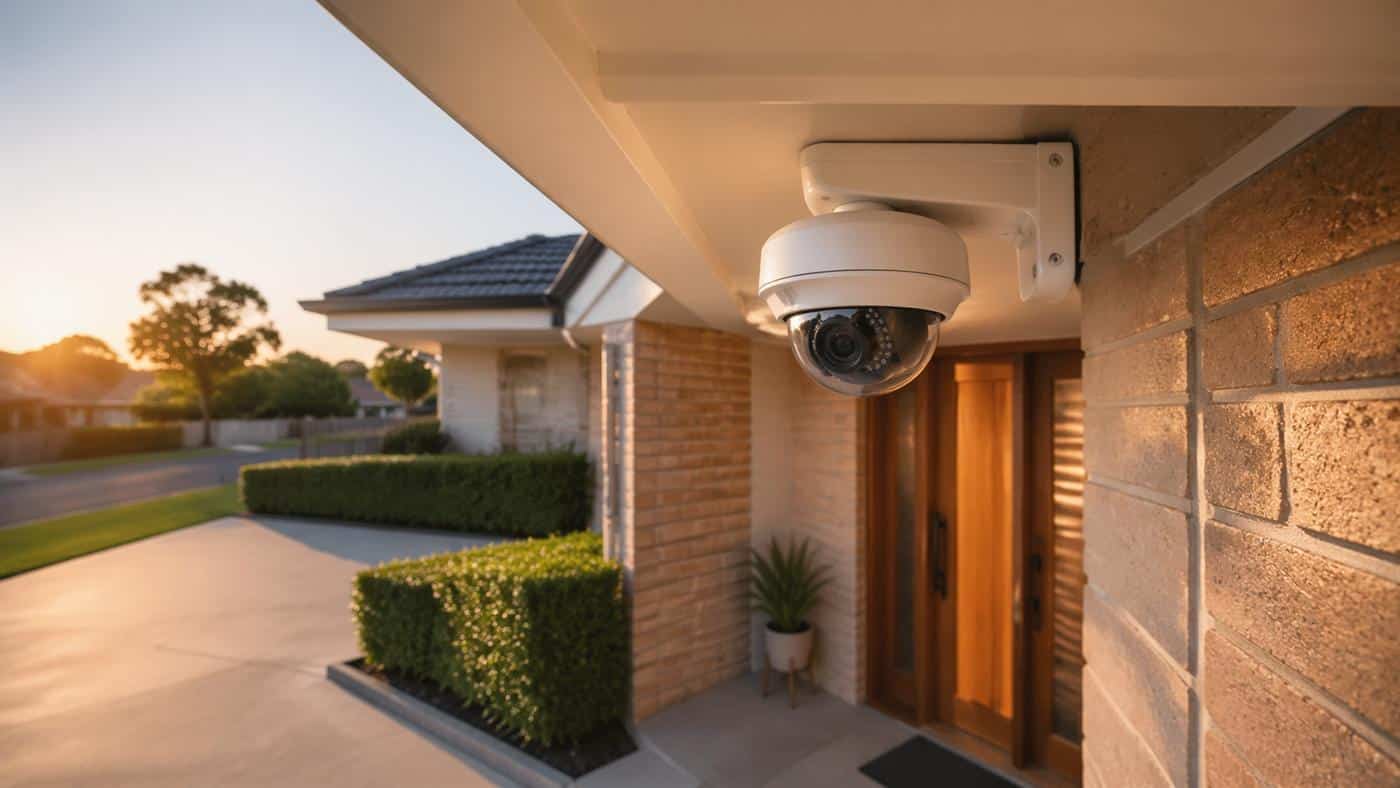
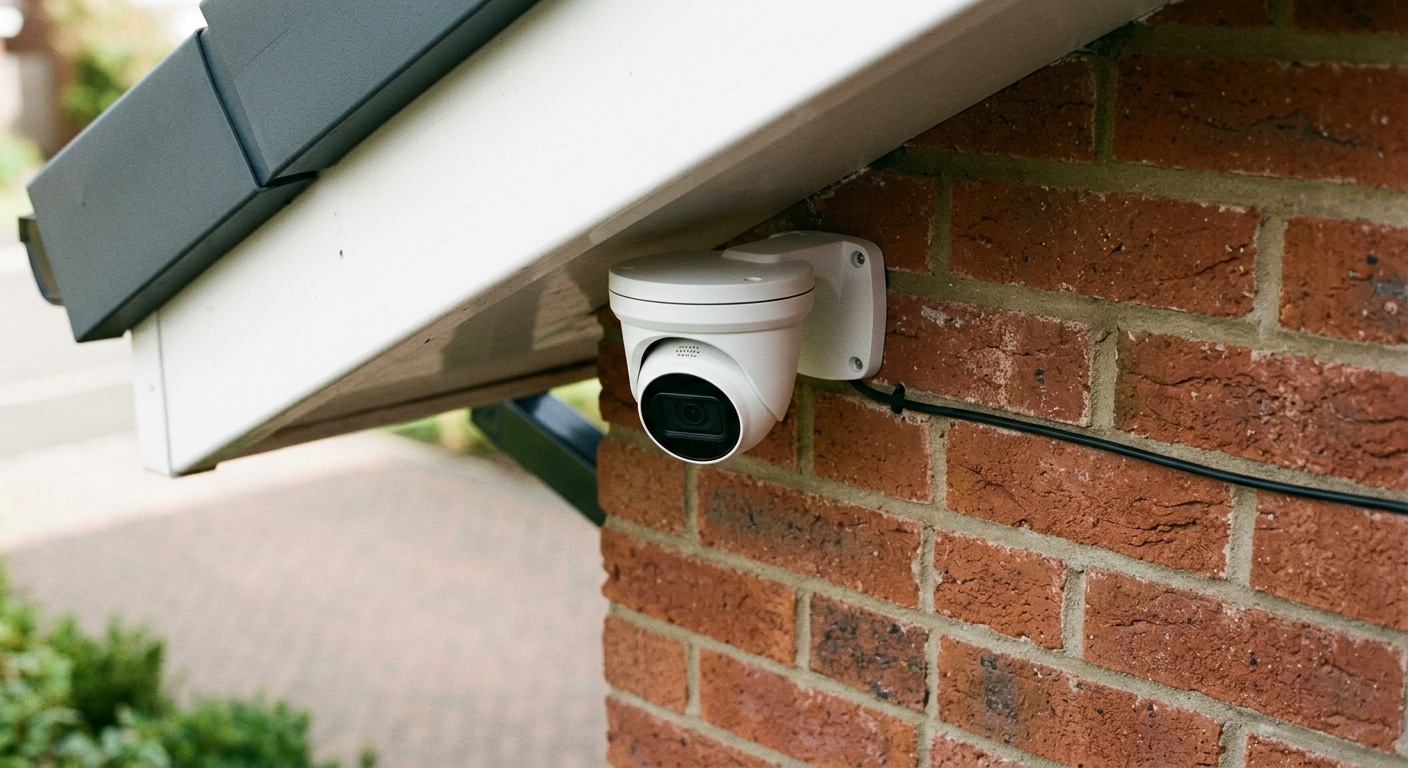
A good camera can still give poor results if it is installed in the wrong place. Walls, roof edges, plants and parked vehicles can block the view. Direct sunlight and outdoor lighting can also affect the image.
Before fixing a camera in place, check what it can see during the day and at night.
Consider these points:
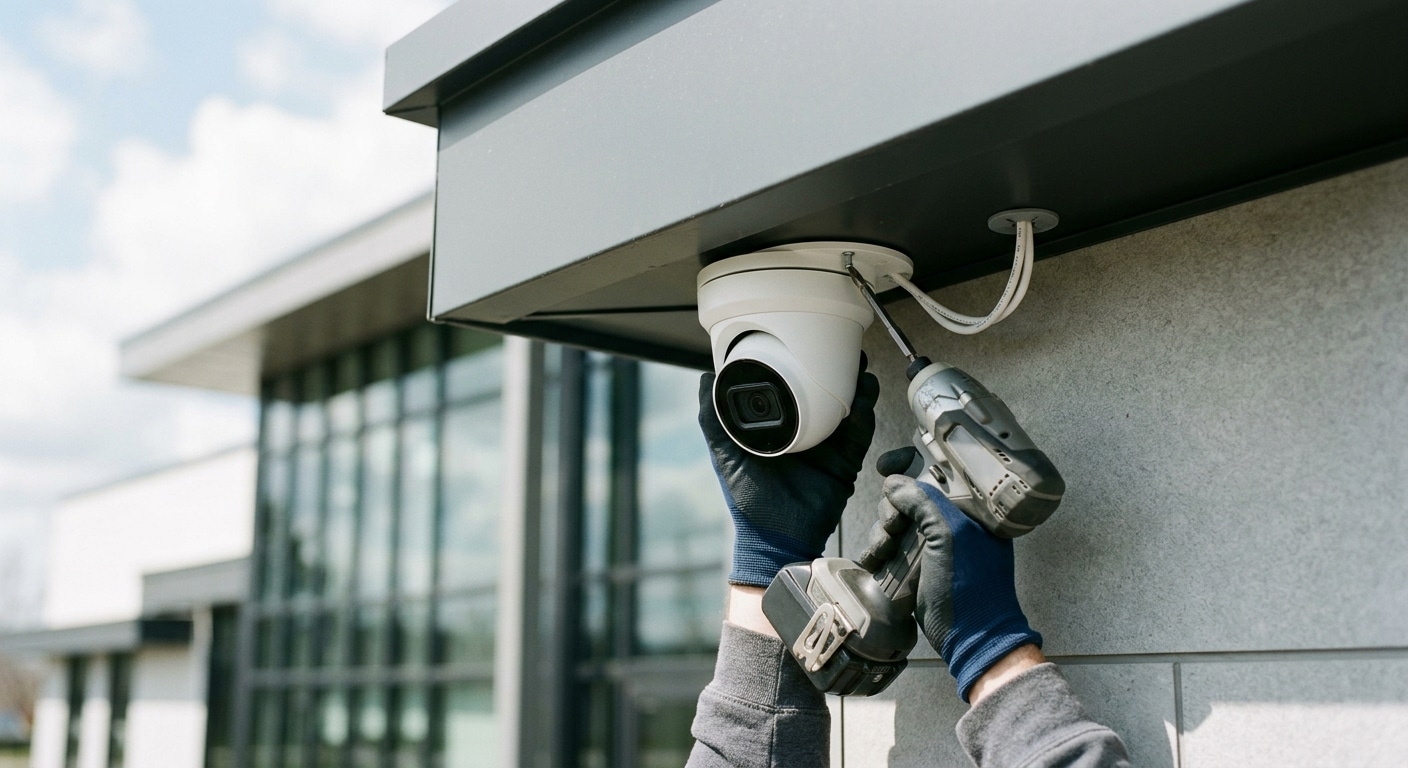
- Height: The camera should be high enough to reduce easy tampering but still provide a useful view.
- Angle: Aim towards the area you want to monitor, rather than leaving large parts of the picture unused.
- Distance: Check whether people and vehicles appear clearly enough at the distance you need.
- Lighting: Consider shadows, glare and how the camera performs after dark.
- Cable access: Make sure the camera can be connected safely and the cables can be installed neatly.
A camera that records a clear view of your front door may be more useful than one that captures a large area without enough detail.
For more advice on aiming cameras and protecting privacy, read our guide to where you can point a home security camera in Queensland.
Shared areas need extra planning
Units and townhouses often have shared driveways, hallways, visitor parking and common walkways. These areas can make camera placement more complicated.
Before installing a camera on a shared wall or in a common area, check who owns or controls the space and whether approval is needed. Body corporate by-laws and property arrangements may affect where equipment can be installed.
If you rent, ask the owner or property manager before drilling holes or attaching equipment to the building.
You should also consider the privacy of neighbours and other residents. Avoid aiming cameras directly into another person’s windows or private courtyard.
The best position is one that covers the area you need to protect while avoiding unnecessary recording of other people.
Wired cameras and Wi-Fi cameras suit different needs
Wi-Fi cameras can be convenient where running cables is difficult. However, they depend on a reliable wireless connection, and signal strength may be affected by walls, distance and interference.
A camera that keeps losing its connection may miss recordings or take longer to load on your phone. Check the Wi-Fi signal at the planned camera location before choosing this option.
Wired cameras can provide a direct network connection and may be a better choice where steady performance is important. They still need suitable cabling, correct installation and a plan for recording and power.
For a townhouse with several camera locations, the installer should consider the cable routes before deciding where each camera will go. For a unit, access to the roof space, walls and common property may limit the available options.
Choose the setup that suits your property, rather than assuming one type is always better.
An intercom may help you manage visitors
Cameras show what is happening around an entrance, but an intercom can help you communicate with visitors before opening the door.
Depending on the system, an intercom may let you speak with a visitor from an indoor unit or a compatible phone. Video intercoms can also show who is at the entrance. Features vary by model and installation.
An intercom may be worth considering if your front door opens onto a shared hallway, if visitors regularly arrive at a gate or if you want to check who is calling before letting them in.
For properties where entry control is important, explore suitable intercom systems in Gold Coast.
Before installing one in a unit complex, check whether the existing entry system is shared and whether the body corporate or building manager needs to approve changes.
Plan the system before choosing the final camera number
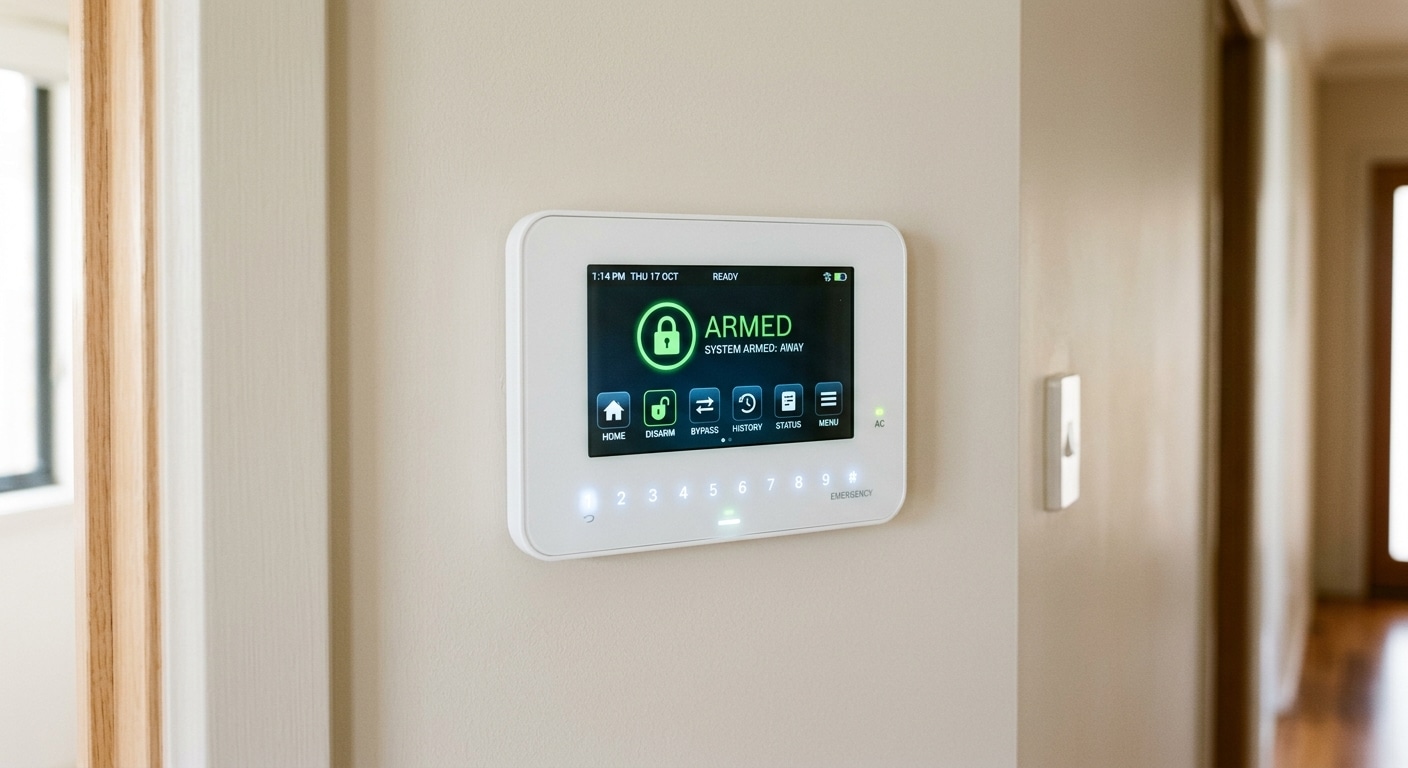
A useful CCTV plan starts with your property layout, the areas you want to protect and the rules that apply to the building. Once those details are clear, it becomes easier to decide how many cameras are needed and where they should go.
For units and townhouses in Surfers Paradise, Tweed Heads and other nearby areas, a carefully planned system can help avoid overlapping views, poor camera angles and unnecessary equipment.
Contact GC Data Cabling to discuss your unit or townhouse security needs and work out a suitable plan for your property.